Mission Statement

"Our mission is to create peace of mind and build enduring relationships."

Bob Lancaster Insurance's mission statement is the core of our culture. Our customers always come first, and we strive to provide them with the products and service that best respond to their needs. Building trust and fostering loyal, long-lasting relationships are the essence of who we are and fundamental parts of our company values.

Putting our mission statement to work

Our employees work hard to connect with our customers on a very real and personal level. Find out what Bob Lancaster’s mission means to them and how they carry it out every day.

Bob Lancaster Insurance, serving Florida's insurance needs since 1964. Contact us today at 321-725-1620 - see what we can do for YOU and YOUR BUSINESS!

Showing posts with label Property insurance. Show all posts

Thursday, September 24, 2015

Coinsurance – What You Don’t Know Can Hurt You

The word “coinsurance” may be the most misunderstood and confusing term in the world of insurance.
One definition of “coinsurance” is used interchangeably with the word “co-pay” – the amount the insurance company pays in a claim. An eighty- percent co-pay (or coinsurance) clause in health insurance means the insurance company pays 80% of the bill. A $1,000 doctor’s bill would be paid at 80%, or $800. The above definition also applies to coinsurance in liability insurance. Few policies have such a clause. Some professional liability and directors’ and officers’ policies in the past included coinsurance. The provision was usually a part of the retention or deductible in a policy. Some employment-related practices contracts have coinsurance.
The term “coinsurance,” when used in the context of property insurance, has an altogether different meaning. Here, coinsurance is the percentage of value that the policyholder is required to insure. A building with a value of $1,000,000 and a policy with an 80% coinsurance clause must be insured for at least $800,000.
To make life more complicated, “value” is determined at the time of the loss. If the amount of insurance is found to be under the coinsurance percentage, then a penalty is applied which reduces the claim payment. This hurts the policyholder.
The building and policy mentioned above illustrates the point. If the policyholder decides to buy $600,000 of insurance and a $200,000 fire occurs, the claim is calculated by dividing what was purchased ($600,000) by what should have been bought ($800,000). The result in this case is 75%. The factor is multiplied by the amount of the loss. The calculation works out:
$200,000 X .75 = $150,000.
The policyholder will receive $150,000 (less any deductible) for the $200,000 claim.
Almost all property insurance policies contain a coinsurance clause. Building insurance, contents coverage, computer coverage, inland marine policies, and tool and equipment floaters all contain the penalty clause mentioned above. Some require 100% of the value!


Thursday, September 17, 2015

Playing it safe: A 10-point risk management checklist for residential rental properties


Are you, and your tenants, protected?

Owning a residential rental property is first and foremost an investment. And like any investment, its success depends on generating income, or in other words, its ability to attract tenants. With more than 108 million renters in the U.S. and over 22 million landlords according to the Rental Protection Agency, it’s easy to see why property owners and landlords need to identify potential hazards for tenants and guests, and address them accordingly.
The National Multifamily Housing Council says more than 43 million households or 35% are renter-occupied. The largest segment of renters, 17%, are 30 years of age or younger. The cities with the largest number of renters include: New York, N.Y.; Los Angeles, Calif.; Chicago, Ill.; Houston, Texas; Philadelphia, Pa.; and Phoenix, Ariz. The majority of renters (43%) live in single-family homes and 35% of renters live in structures with five or more units.
Nothing attracts and retains renters like a reputation for being a safe and secure place to live. Successful landlords and their property managers know that maintaining safe premises is an ongoing process of reducing risk. The following 10 practices serve as a good starting place
Front entrance
1. Doors
All entry doors, whether at common entrances or individual apartments, should be of solid wood construction or steel, and any glass panels should be reinforced and shatterproof.
Locksmith
2. Locks
A deadbolt lock should secure each apartment door and be changed or re-keyed when a tenant moves. In addition, a door chain allows tenants to see who's at the door without completely opening it. A peephole is even better. Windows should also have working locks.
Outdoor lighting
3. Appropriate Lighting
Dark areas not only invite crime, they frighten tenants. Indoor hallways should be well lit at all times. LED bulbs provide excellent light. Floodlights along paths, parking areas and garbage disposal areas can be controlled by timers or sensors to provide lighting from dusk to dawn. Less-visited spots such as storage areas can be connected to motion-detector lights to save energy.
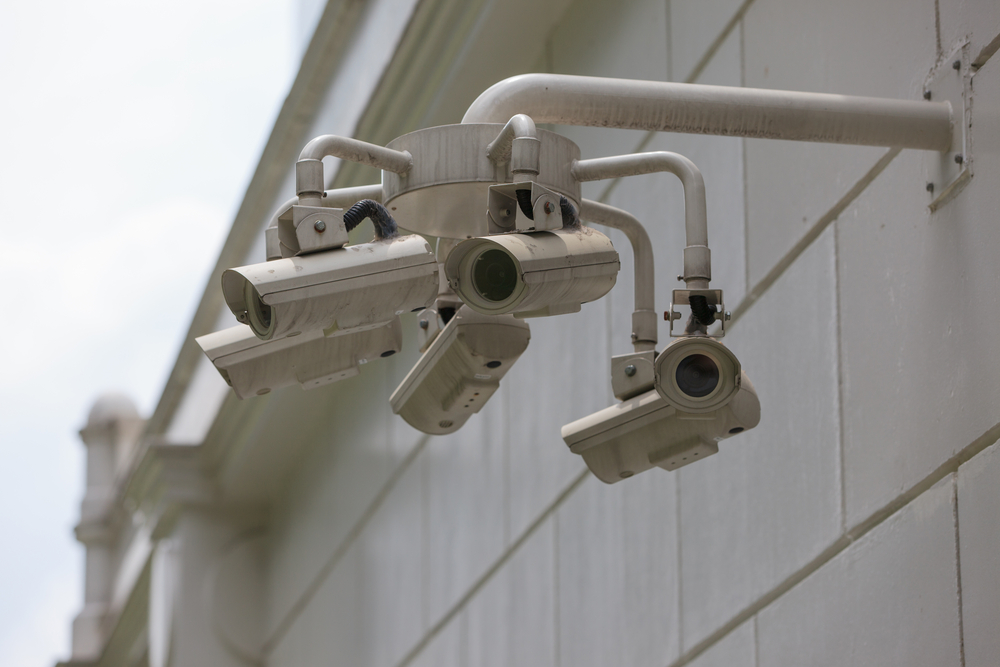
 security cameras
4. Security Cameras
Mounting security cameras in public areas not only gives tenants a sense of security, but deters vandalism as well. There should be a mix of camera types to best monitor targeted areas:
  • PTZ (pan tilt zoom) for large areas like walkways, swimming pools or parking lots.
  • Fixed cameras for enclosed areas such as front and back entrances, as well as elevators, mailbox areas and stairwells.
  • Day/night cameras for outdoor areas that get round-the-clock foot traffic or indoor areas where lights are dimmed overnight.
Cameras protect the landlord in liability cases as well, since they can capture a fall or accident and confirm whether or not the property contributed to the incident.
 Intercom
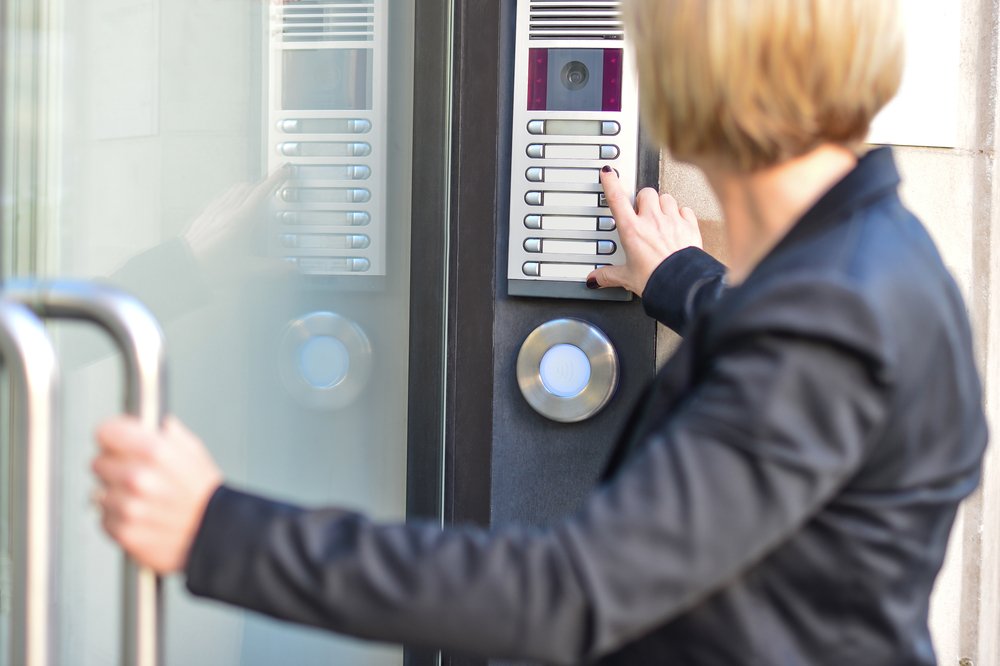
5. Intercoms
In a multi-dwelling property with a main locked main entry, a multi-line intercom at the entrance allows tenants to communicate with anyone who rings the bell before allowing them access into the building. Some systems have built-in cameras for added security.
Several additional measures that will complement these risk management practices include:
 Background check
6. Prospective Tenant Screening
Not all crime comes from outside of the building. A landlord or property manager should diligently screen prospective tenants to make sure they are law-abiding individuals who will pay their rent, respect the rights of their fellow tenants and will not damage the property. In addition to an interview, candidates should fill out an application in which they give the following information to enable a credit and background check.
  • Current employment
  • Income information
  • Current and former landlord contact information
  • Personal references

Rental contract
7. Rental Contract
Sometimes evictions are necessary. Sooner or later an irresponsible tenant will disturb the neighbors, destroy or damage the property, or fail to pay the rent. To protect themselves and make the eviction process flow smoothly, landlords should require a signed rental contract spelling out both landlord and tenant responsibilities and grounds for eviction.
Since a signed and dated agreement will serve as a legal document in what could be a long eviction process, all rental contracts should be stored in a fireproof, locked file or safe.
 Pet policy
8. Pet Policy
Pet-friendly landlords should include a pet agreement in the rental contract, since pets of irresponsible owners can damage property, spread disease, and annoy or harm other tenants. The agreement should be specific as to:
  • Number of animals allowed per unit
  • Types and breeds allowed
  • Weight limit
  • Specific reasons why a tenant can be asked to remove the animal
Non-pet owners should be required to sign the agreement as well in case they acquire a pet after establishing residency.
Insurance policy 
9. Proper Insurance Coverage
Even with all these strategies in place, disasters still occur. Landlords should ensure that they have the property insurance with appropriate coverage limits. At a minimum, the policy should include the following coverage:
  • Property damage
  • Liability
  • Loss of rental income/business interruption
  • Flood insurance
  • Premises liability

Smoke detector
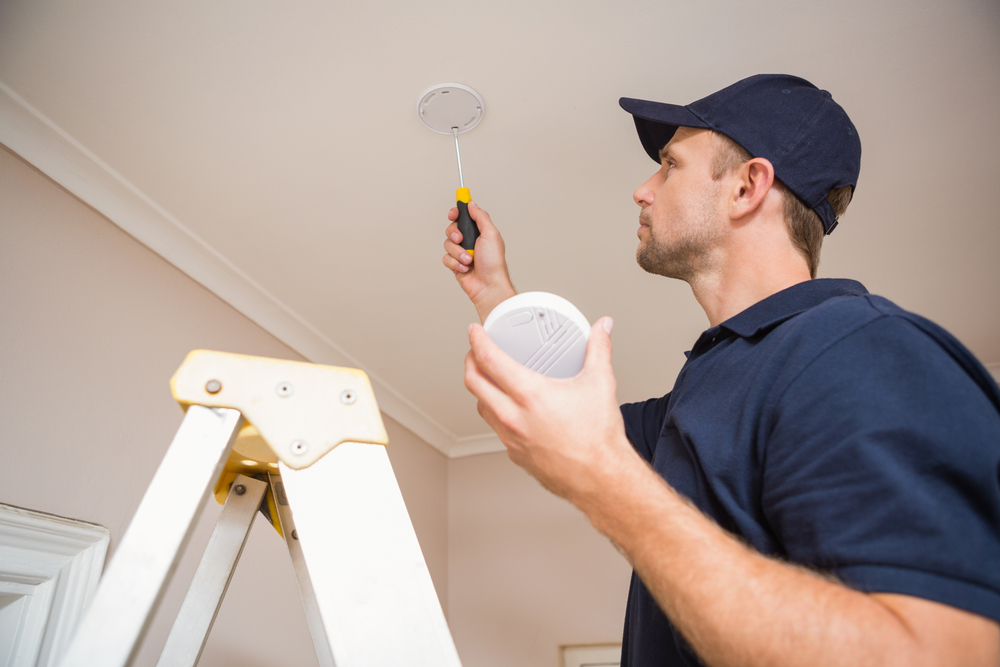
10. Smoke and Carbon Monoxide Detectors
No list of landlord precautions would be complete without smoke and carbon monoxide detectors. Many states require them, but regardless, any responsible landlord or property manager will make sure each unit contains functioning detectors and accessible fire extinguishers in common areas.
Appropriate risk management strategies protect the tenants and the property owner, providing a safer environment for all in which to live and work. 
Contact us for all your Insurance needs! (321)725-1620 
Bob Lancaster Insurance
Serving Florida since 1964

Thursday, August 27, 2015

Disaster preparedness for commercial property insurance customers

One of the most critical areas of preparing a business for disaster is insuring its property.
Businesses are just as susceptible as homeowners to the potential for catastrophes like hurricanes and floods. While consultants might place emphasis on the importance of emergency continuity plans and other measures that ensure that businesses survive the unthinkable, one of the best ways decision makers can prepare is by reviewing their insurance coverage on a regular basis. All emergency preparedness steps are enhanced when the property the business owns is sufficiently covered. 
"Businesses of all sizes need comprehensive insurance to protect against disaster. Determining the appropriate amount of insurance can be done via property and risk assessments, along with the consideration of recovery options," says Jamie Miller, head of North America property for Swiss Re Corporate Solutions, in an interview with Property Casualty 360. 
One of the most critical areas of preparing a business for disaster is insuring its property. If updated valuations aren't conducted on a regular basis, the replacement cost for the business personal property or the building may not reflect the actual amount needed to restore or rebuild after a crisis. This can lead to settlements that aren't sufficient to cover damages sustained in a natural disaster, fire or other loss. Some commercial customers are proactive about these reviews but others may not. 

Contact us for all your Insurance needs! (321)725-1620 
Bob Lancaster Insurance
Serving Florida since 1964

Monday, August 19, 2013

Lack of Documentation = CLAIM CLOSED

I often tell policyholders, be it associations, unit owners, or homeowners, to be sure to document their personal property before a loss occurs. This is especially important for unit owners that have downsized from larger houses and may keep some of their property in storage. Often pictures, or even a video, can make all the difference in getting a claim paid.

The peril of not documenting all personal property was recently felt by a 92 year old woman in Palm Springs California. This tragic story began when Erica Haines, a Holocaust survivor and double amputee requiring constant assistance from caregivers, noticed some of her gold silverware was missing from her home. When she realized that it was not simply one piece that had been misplaced, she and her current nurse began taking inventory of her personal property to see what was missing.

In the end, Ms. Haines was missing a great deal of the personal property she had collected over her life including clothing, cameras, rare books, original paintings, medicine, jewelry, and even a spare set of prosthetic legs! All in all, it appears that unscrupulous caregivers had stolen approximately $145,000 from the elderly woman.

Understandably distraught, Haines notified the police, obtained a police report, and filed a claim with Fire Insurance Exchange (a Farmers Insurance Group company) with whom she had maintained a policy since 1967.

According to the lawsuit filed on her behalf, Farmers never even sent an adjuster to the home. Instead, Farmers sent her a letter less than two weeks later denying the claim because “she could not prove that the thefts had occurred”!

While it is unclear what, if anything, Ms. Haines could have done to “prove” her claim to Farmers, this story underscores the importance of thoroughly documenting your possessions before a loss occurs. Without proof that the possessions indeed existed, it is more difficult to get a claim paid.

Contact us for all your Insurance needs! (321)725-1620
Bob Lancaster Insurance
Serving Florida since 1964

Thursday, July 18, 2013

Commercial Property Insurance May Cover "Extra Expenses"

Many businesses buy business interruption coverage to cover a loss of business income in the event of a covered loss. Business income provisions generally provide benefits for an amount of time designated in the policy, typically termed the period of restoration, or until the business is able to resume operations.

Most commercial policies have additional business protections that might fall under the business interruption umbrella, such as "extra expense coverage" or other added coverages to cover specialized losses such as valued papers, electronic data, debris removal, etc. Generally, "extra expense" can cover relocation costs for a business or increased labor costs when a business uses best efforts to mitigate the business interruption and continues operation. "Extra expense" is often defined as the necessary expenses during the period of restoration that would not have been incurred without the loss. Typical commercial policies exclude or provide limited coverage for losses to valuable papers, electronic data, and records. In the age of electronic data, computers are necessary in almost every business and valuable records are kept on site on local computer terminals. Extra coverage for databases and other electronic media should be considered. It just may be such specialized coverage saves an insured extra headache and aids in a more complete and speedy loss recovery.


Contact us for all your Insurance needs! (321)725-1620
Bob Lancaster Insurance
Serving Florida since 1964